
Updated November 15, 2026
Short answer: Fermented foods and probiotic supplements both bring live microbes into your diet, but they aren't the same thing. Fermented foods offer flavor, nutrition and a mix of cultures, though you usually can't tell which strains you are getting or how many are still alive. A probiotic supplement identifies specific strains in a consistent amount. Many people enjoy both.
What fermented foods offer
Fermentation is one of the oldest ways to preserve food. Bacteria or yeasts transform sugars and starches, creating the tang of yogurt, the fizz of kombucha and the sourness of sauerkraut. Fermented foods can be part of a varied, fiber-rich diet that supports a balanced gut microbiome, and many are nutritious in their own right.
Not every fermented food still contains live cultures by the time you eat it, though:
- Sourdough bread is fermented, but baking kills the live cultures.
- Many shelf-stable sauerkrauts and pickles are pasteurized, or are made with vinegar rather than by fermentation.
- Some yogurt products are heated after culturing, which reduces live cultures.
For live cultures, look in the refrigerated section and read the label.
What probiotic supplements offer
"Fermented" and "probiotic" are often used as if they mean the same thing. In scientific terms, probiotics are live microorganisms that, when given in adequate amounts, can benefit the host, and their effects can be specific to the strain. Many fermented foods, including kombucha, sauerkraut and kimchi, contain live cultures but do not typically contain microorganisms shown to be probiotic (NIH Office of Dietary Supplements). A well-labeled supplement tells you:
- Each strain by genus, species and strain ID, such as L. bulgaricus LB-51
- How many live cultures it contains, ideally through the expiration date
- How to store it and how to take it
That consistency is the main difference. A supplement gives you the same identified strains in the same amount each day, which is why some people pair one with fermented foods rather than choosing between them. Our probiotic buyer's guide covers what to compare.
What labels do and don't tell you
Food labels and supplement labels give you different kinds of information:
- "Made with live cultures" or a "Live & Active Cultures" seal on yogurt tells you cultures were present, but usually not which strains or how many remain when you eat it.
- "Fermented" describes how a food was made, not whether it still contains live microbes.
- Added sugar is common in flavored yogurts, kefirs and kombuchas, so check the nutrition panel.
- Gums, thickeners and stabilizers are often added to store-bought yogurt for texture.
- Supplement labels should list each strain, the culture count, and whether that count applies at manufacture or through expiration.
A closer look at kombucha
Kombucha is a fizzy fermented tea made with a culture of bacteria and yeast, often called a SCOBY. Many people enjoy it as an alternative to soda. A few things are worth knowing:
- Kombucha contains small amounts of alcohol. Fermentation can continue in the bottle, which can raise the alcohol content (TTB).
- Because it is made from tea, it usually contains some caffeine.
- Many bottled versions have added sugar or juice.
- Home brewing takes careful cleanliness, since unwanted microbes can grow in a poorly kept batch.
If you are pregnant or breastfeeding, or have a health condition, ask your doctor before making kombucha a regular habit.
Simple ways to add fermented foods
- Make your own yogurt. Homemade yogurt lets you skip added sweeteners, gums and stabilizers, and it is a fun project with kids. Natren Yogurt Starter uses L. bulgaricus LB-51 and S. thermophilus BC 122, makes up to 30 quarts and contains no gums or additives. Our yogurt-making guide walks through each step.
- Try kefir. This tangy, drinkable cultured milk works on its own, poured over oats or in place of milk in a smoothie.
- Add a spoonful of sauerkraut or kimchi. Choose a refrigerated, unpasteurized version and add it to sandwiches, grain bowls or eggs after cooking.
- Swap a soda for kombucha now and then, choosing a lower-sugar option.
- Blend a yogurt smoothie. A few favorites made with homemade yogurt: a "carrot cake" smoothie with carrots, banana, pineapple, cinnamon and a pinch of nutmeg; a kale, oat and blueberry smoothie; a creamy lemon smoothie with yogurt and honey; or a cardamom mint lassi, the traditional Indian yogurt drink.
Adding a probiotic powder to food
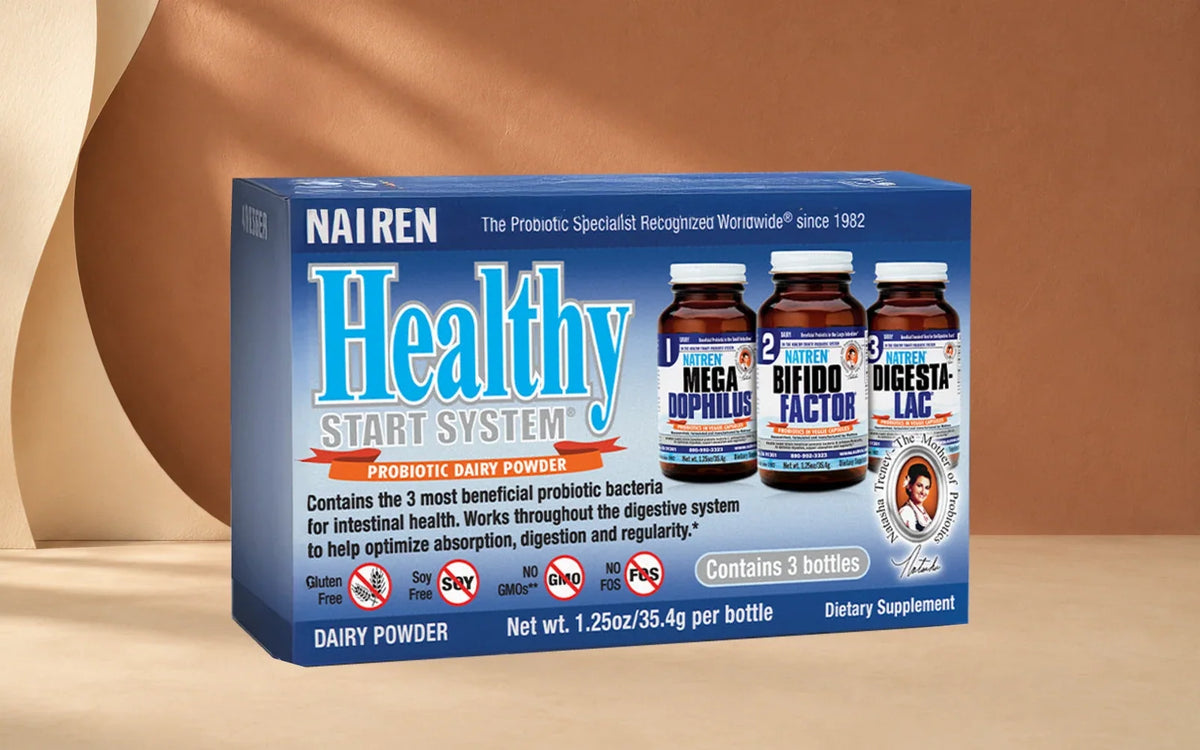
If you use a probiotic powder, such as Megadophilus vegan powder or Bifido Factor vegan powder, a few kitchen habits help keep the cultures alive:
- Add the powder to cool or lukewarm food, never hot food, and don't cook or reheat food after the powder is added.
- Avoid mixing it into acidic foods such as citrus juice, vinegar dressings or tomato dishes. Plain yogurt or a banana-based smoothie works well, so skip the powder in the lemon smoothie.
- Stir it in after blending, and finish the serving so you get the full amount.
- Follow the label for serving size, and ask your pediatrician before giving any probiotic to a child.
Frequently asked questions
Is a fermented food the same as a probiotic?
Not quite. “Fermented” describes how a food was made. A probiotic is a specific, identified live microorganism provided in an adequate amount. Some fermented foods, such as sourdough bread or pasteurized sauerkraut, no longer contain live cultures by the time you eat them.
Can I mix a probiotic powder into food?
Yes, with a little care. Add it to cool or lukewarm food, never hot food; don't cook or reheat food after adding it; avoid acidic foods such as citrus juice or tomato dishes; and finish the serving. Follow the label for serving size.
Does kombucha contain alcohol or caffeine?
Usually small amounts of both. Kombucha contains a little alcohol, which can increase with longer fermentation, and because it's made from tea it usually contains some caffeine. Many bottled versions also have added sugar or juice.
Sources
- National Institutes of Health, Office of Dietary Supplements. Probiotics: Fact Sheet for Health Professionals. https://ods.od.nih.gov/factsheets/Probiotics-HealthProfessional/
- Alcohol and Tobacco Tax and Trade Bureau. Kombucha Information and Resources. https://www.ttb.gov/kombucha/kombucha-general
These statements have not been evaluated by the Food and Drug Administration. These products are not intended to diagnose, treat, cure, or prevent any disease.


